


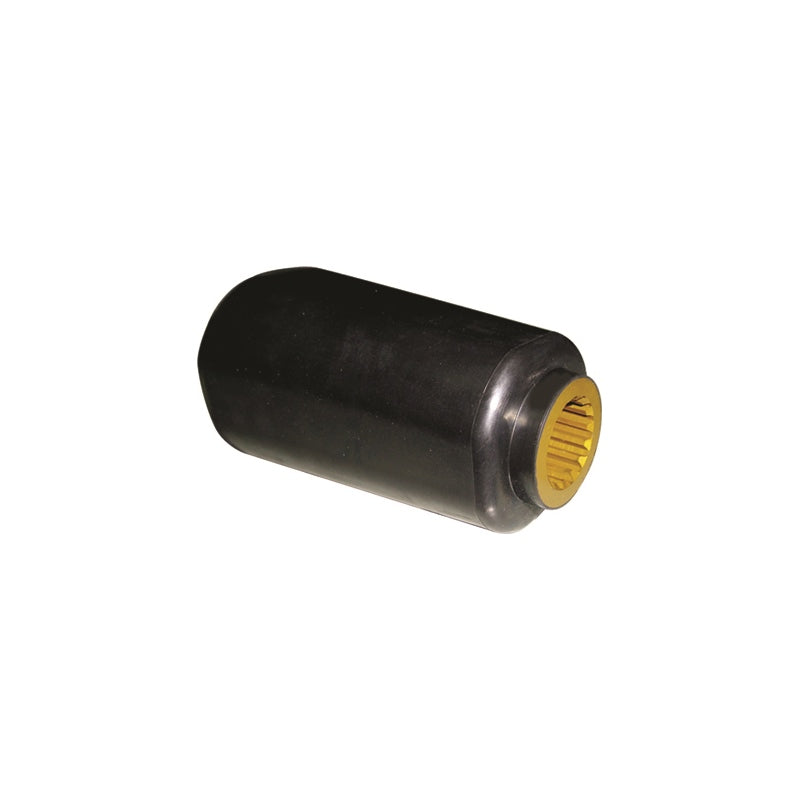


The outboard lower unit, frequently referred to as the gearcase, is the bottommost section of your motor responsible for converting engine power into actual thrust. Its primary function is to house the drive shaft, propeller shaft, and the internal forward, pinion, and reverse gears that transfer rotational power from the engine's powerhead down to the propeller. It also acts as the structural anchor for the skeg (the protective bottom fin) and contains the water pump impeller which constantly cycles cooling water up into the engine block. If your current casing is leaking or cracked, upgrading to a complete lower unit replacement ensures your entire propulsion and cooling system stays fully protected.
You can identify a failing lower unit by checking for four critical warning signs during routine maintenance. First, if draining your gear oil reveals a milky, discolored, or chocolate-milk appearance, your water seals are blown and internal corrosion has already started. Second, finding large metallic chunks or heavy flakes attached to the magnetic drain plug indicates that your internal gears are actively shredding. Third, a loud clunking noise or noticeable slipping when shifting into forward or reverse means your clutch dog or forward gears are severely worn. Finally, if your propeller is completely seized and won't spin freely by hand while in neutral, your bearings have likely locked up. Replacing a severely damaged assembly early prevents catastrophic engine failure and saves thousands in secondary repair costs.
No, you should never use standard automotive 80W-90 gear oil in a marine gearcase. Outboard motors require specialized high-performance marine gear lubricant because it is formulated with advanced emulsifiers and rust inhibitors that automotive oils completely lack. Marine-grade lubricants are specifically engineered to maintain their essential lubricating properties and protect vital components even when contaminated with up to 10% water. Using standard automotive fluid will cause the oil to break down instantly the moment moisture bypasses a seal, leading to rapid gear friction, overheating, and total internal breakdown. Protecting your investment with premium marine-spec fluid ensures your gears survive the harsh underwater environment season after season.
While you can technically start an outboard powerhead without the lower unit attached, doing so is highly discouraged and poses a massive risk to your engine. Because the water pump impeller lives inside the lower unit assembly, running the engine without it means there is absolutely zero cooling water reaching the engine block. Without continuous water flow, a dry marine engine will experience immediate overheating and can warp cylinder walls or blow head gaskets within 30 to 45 seconds. Additionally, the drive shaft remains completely unsupported during operation, creating a dangerous mechanical vibration. If you are troubleshooting an engine issue, it is always safer to install a verified replacement gearcase first to ensure proper cooling and structural alignment before turning the key.
Choosing between a complete lower unit replacement and a rebuilt kit depends entirely on the structural integrity of your current gearcase housing. A lower unit rebuild kit is an excellent, cost-effective choice if your outer casing is entirely intact, uncracked, and the failure was limited to a single worn bearing, a bad seal, or routine water pump wear. However, if your housing is cracked, the skeg is snapped off, or exploded gears have gouged the internal walls, a complete replacement unit is highly recommended. Buying a fully assembled unit eliminates hours of expensive, highly technical shimming labor, minimizes shop downtime, and provides a fresh factory-spec seal that a partial rebuild simply cannot guarantee.
To ensure a perfect 100% fitment match, you must verify your engine's specific build configuration before ordering because marine manufacturers frequently change gear ratios and shaft profiles across different model years. You will need to locate your exact engine serial number, confirm the horsepower (HP), and note whether it is a 2-stroke or 4-stroke model. Finally, you must measure your shaft length from the top of the transom mounting bracket down to the anti-ventilation plate above the prop, which typically defaults to Short (15 inches), Long (20 inches), or Extra Long (25 inches). Matching these precise specifications guarantees that your new aftermarket or OEM-spec unit bolts on flawlessly with zero modifications required.