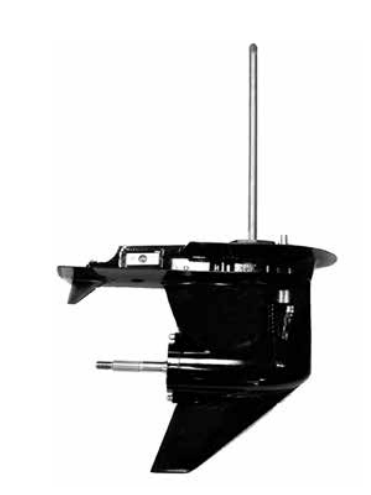
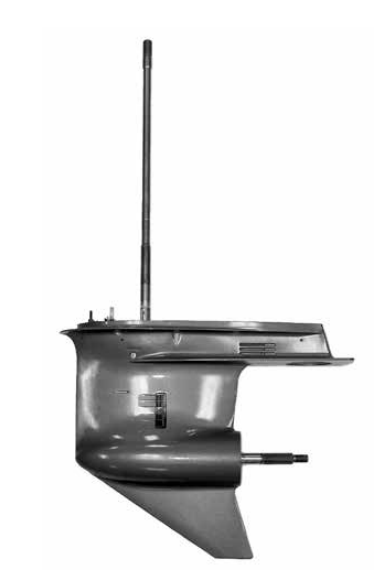
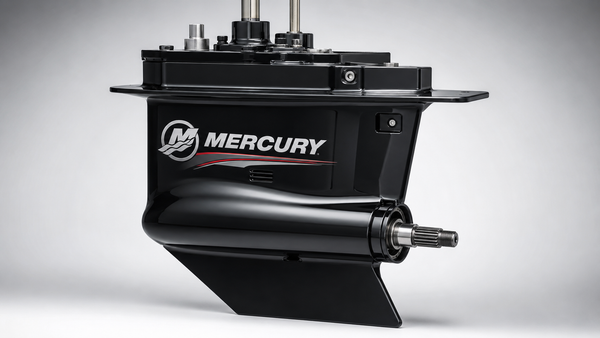
This OBR Mercury Verado 135–200 HP lower unit family is intended for selected 1.7L inline-four supercharged Verado four-stroke outboards. Available configurations include new and remanufactured gearcases with 20-inch L or 25-inch XL driveshaft lengths. Standard-rotation and counter-rotation options are available, depending on the selected ME-G4 SKU.
Select ME-G4-11 for a standard-rotation 20-inch configuration, ME-G4-12 for a standard-rotation 25-inch configuration or ME-G4-13 for a counter-rotation 25-inch configuration. New products use the -N suffix, while remanufactured products use the -R suffix.
Horsepower and external appearance cannot confirm fitment. Before ordering, verify that the engine is a supercharged 1.7L inline-four Verado and confirm the complete engine model, serial number, original 2.08:1 ratio, driveshaft length and rotation. SEI SE90-221 is a separate product family and is not an alternate part number for these OBR ME-G4 variants.
-
Verado Optimized: Tailored to the 135, 150, 175, and 200 HP 4-Cylinder Supercharged platform.
-
Hydrodynamic Bullet: Designed for reduced drag and improved fuel economy at cruising speeds.
-
Saltwater Protection: Coated with a high-grade marine finish for superior corrosion resistance.
Confirm all of the following before ordering:
- Mercury Verado branding is present on the engine.
- The powerhead is a supercharged 1.7L inline-four four-stroke.
- The engine is a selected 135, 150, 175, or 200 HP application.
- The original lower-unit ratio is 2.08:1.
- The existing gearcase uses the applicable 20-spline driveshaft and 15-spline propeller shaft.
- The driveshaft length is 20-inch L or 25-inch XL.
- The selected standard or counter rotation matches the existing installation.
SKU mapping:
- ME-G4-11-N/R: 20-inch L, standard rotation
- ME-G4-12-N/R: 25-inch XL, standard rotation
- ME-G4-13-N/R: 25-inch XL, counter rotation
Supplier catalogs differ on whether this family ends with the 2018 or 2019 model year. A complete engine serial number is therefore required, particularly for a 2019 application.
Before dispatch, the selected SKU should be reviewed against the engine model and serial information supplied with the order. If the information is incomplete or conflicts with the selected shaft length, rotation or configuration, the shipment should be paused and the customer contacted for clarification.
The shipping carton, internal protection and SKU label should be inspected before release to the carrier. The shipment record should confirm that the packed SKU matches the customer’s selected new or remanufactured configuration. Do not publish a pre-shipment testing claim unless the exact inspection or testing process is documented.
The customer should be informed that the gearcase ships without gear oil and must be filled with the engine manufacturer’s required lubricant before installation or operation. Any dry-shipping notice supplied by OBR should remain visible inside the package and in the shipment communication.
Once the order has cleared the fitment and packaging review, tracking information should be provided using the contact details submitted at checkout. The customer should verify the delivery address, monitor the carrier’s tracking updates and arrange to receive the shipment when required. Address changes should be requested before carrier pickup because post-dispatch changes may cause delays or additional fees.
When the shipment arrives, inspect the carton for punctures, crushing or water exposure. Photograph visible damage, retain the carton and packing materials, and report shipping damage before installation. Do not install or operate a visibly damaged, incorrect or mislabeled shipment.