


Riptide Fortrex 80 vs. 112 lb Thrust: Which One Should You Choose?
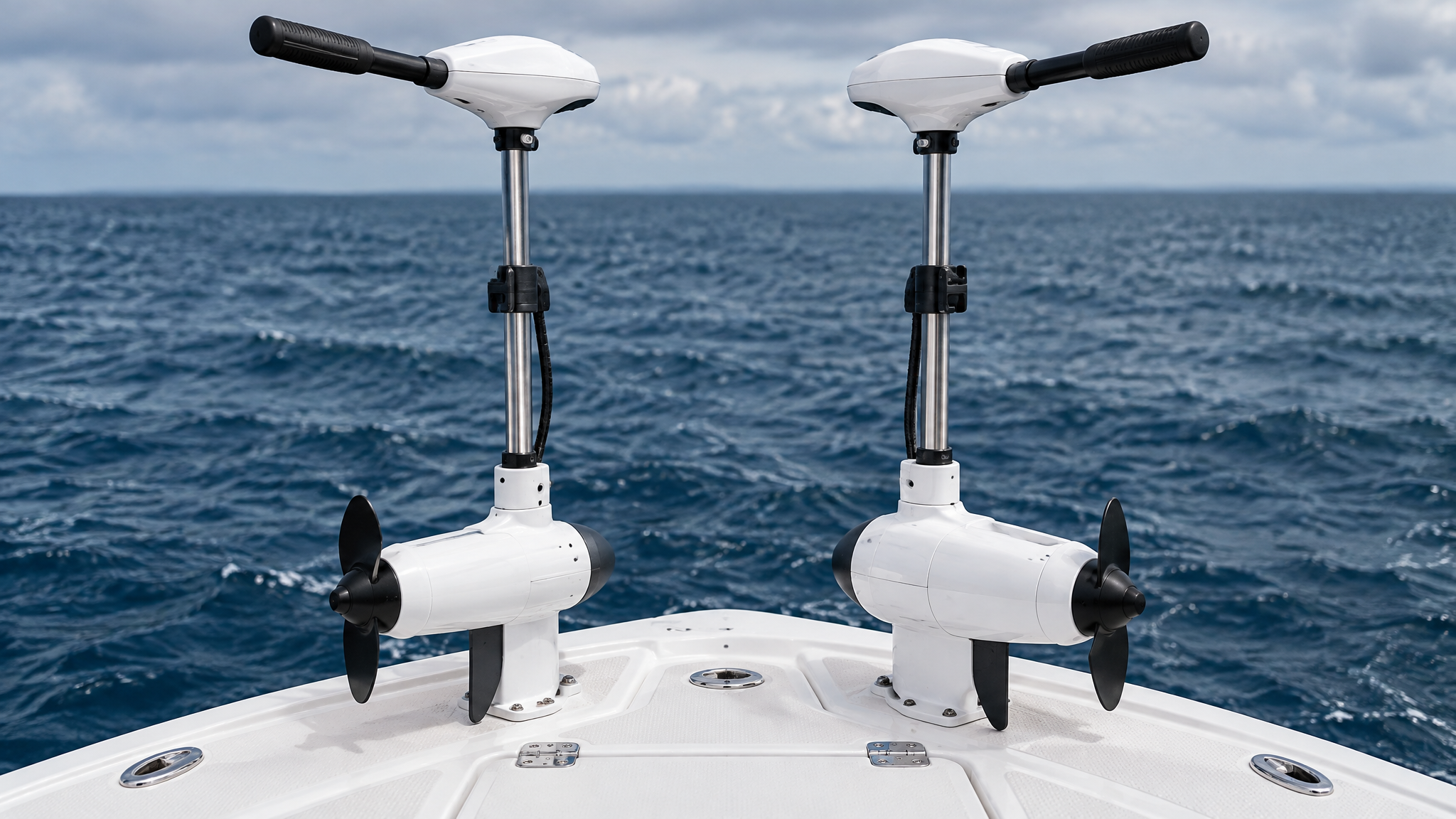
Choosing between Riptide Fortrex 80 and 112 lb thrust is a decision about more than power. It is also a choice between different battery voltage requirements, different boat-control needs and the type of saltwater conditions you expect to fish most often.
This Riptide Fortrex 80 vs. 112 lb thrust guide explains the key differences to consider before selecting a trolling motor. For available configurations, visit the Minn Kota Riptide Fortrex trolling motors collection.
Riptide Fortrex 80 vs. 112: The Primary Difference
The fundamental difference is available thrust. A Riptide Fortrex 112 lb thrust option provides more thrust than an 80 lb thrust option. That additional capability may be valuable for boats that are heavier when fully loaded, have more windage or regularly operate in strong wind, current and tide.
However, more thrust is not automatically the best answer for every boat. The most effective choice is the configuration that matches your boat’s real operating conditions and electrical system.
Riptide Fortrex 80 lb Thrust and 24V Battery Requirements
A Riptide Fortrex 80 lb thrust configuration uses a 24V battery requirement. This option may be appropriate for anglers whose boat weight, hull design and usual fishing conditions do not require the additional thrust of the higher-power configuration.
When evaluating an 80 lb thrust Riptide Fortrex, consider whether your boat typically operates in more protected water, how much gear is carried, how often you fish in wind and whether your current battery layout is designed for a 24V trolling motor system.
Questions to Ask Before Choosing Riptide Fortrex 80
- What is the boat’s fully loaded fishing weight?
- Will the boat primarily operate in protected bays, flats or calmer saltwater areas?
- How often will the motor need to hold the boat against wind or moving water?
- Does the boat have the required 24V battery setup?
- Is the available shaft length appropriate for the bow-to-waterline measurement?
For a broader overview of thrust, voltage and shaft selection, read the Minn Kota Riptide Fortrex buying guide.
Riptide Fortrex 112 lb Thrust and 36V Battery Requirements
A Riptide Fortrex 112 lb thrust configuration uses a 36V battery requirement. The additional thrust can offer more capability when a boat is heavier, more exposed to wind or regularly used in stronger current and tidal movement.
Before choosing a 112 lb thrust model, make sure your boat can support the required 36V battery system, including battery capacity, available installation space, charging plan and appropriate marine wiring. Confirm all requirements for the exact model before purchase or installation.
When Higher Thrust May Be Worth Considering
- Your boat carries substantial fuel, gear, passengers and fishing equipment.
- You often fish in open saltwater where wind can increase quickly.
- You regularly encounter strong current, tide or moving water.
- Your hull has significant wind exposure above the waterline.
- You want additional thrust reserve for more demanding conditions.
- Your boat is already planned or equipped for a 36V trolling motor battery system.
Boat Weight Matters More Than Empty Boat Weight
One of the most common mistakes when choosing a Riptide Fortrex is using only the manufacturer’s listed dry weight. A boat on the water is rarely operated at dry weight. Fuel, batteries, tackle, rods, coolers, electronics, anchors, safety gear, passengers and livewell water all add to the actual load.
For a better Riptide Fortrex thrust decision, estimate the boat exactly as you usually fish it. If you fish tournaments, long runs or offshore-adjacent saltwater areas, your fishing load may be significantly different from a lightly equipped day boat.
Wind, Current and Tide Can Change the Right Choice
Riptide Fortrex thrust selection should reflect where and when you fish. A boat that performs well in calm, protected water may need more power when wind rises, tide begins moving or current pushes across a channel edge.
Think about your hardest normal day, not only your easiest day. If you frequently need to maintain position while casting, control drift near structure or work against moving water, selecting enough thrust for those conditions is often more useful than choosing based on calm-water performance alone.
Do Not Forget Shaft Length
Thrust and voltage are essential, but shaft length is equally important. A powerful trolling motor still needs the right shaft length for the bow height of your boat. Measure from the motor mounting point to the waterline and account for how your bow moves in chop, wake and changing load conditions.
Read our Riptide Fortrex 52 vs. 62-inch shaft guide to compare shaft length and understand the value of Lift-Assist.
Riptide Fortrex 80 vs. 112: A Practical Decision Summary
- Choose based on total boat load: Calculate real fishing weight, not empty weight.
- Consider your fishing environment: Wind, current, tide and exposure affect power needs.
- Match voltage correctly: Riptide Fortrex 80 uses 24V, while Riptide Fortrex 112 uses 36V.
- Plan the electrical system first: Confirm batteries, wiring, space and charging before ordering.
- Measure shaft length: Correct bow-to-waterline fit supports reliable operation in real conditions.
Shop Riptide Fortrex Thrust Options
If you are deciding between 80 lb and 112 lb thrust, compare the complete configuration—not just the thrust rating. Review the available motors, then confirm the exact MPN, voltage, shaft length and compatibility details before purchasing.
View Minn Kota Riptide Fortrex trolling motors. Need personalized selection help? contact Mariners Warehouse with your boat details, usual conditions and preferred setup.