


Freshwater vs Saltwater Trolling Motors: What Should You Choose?
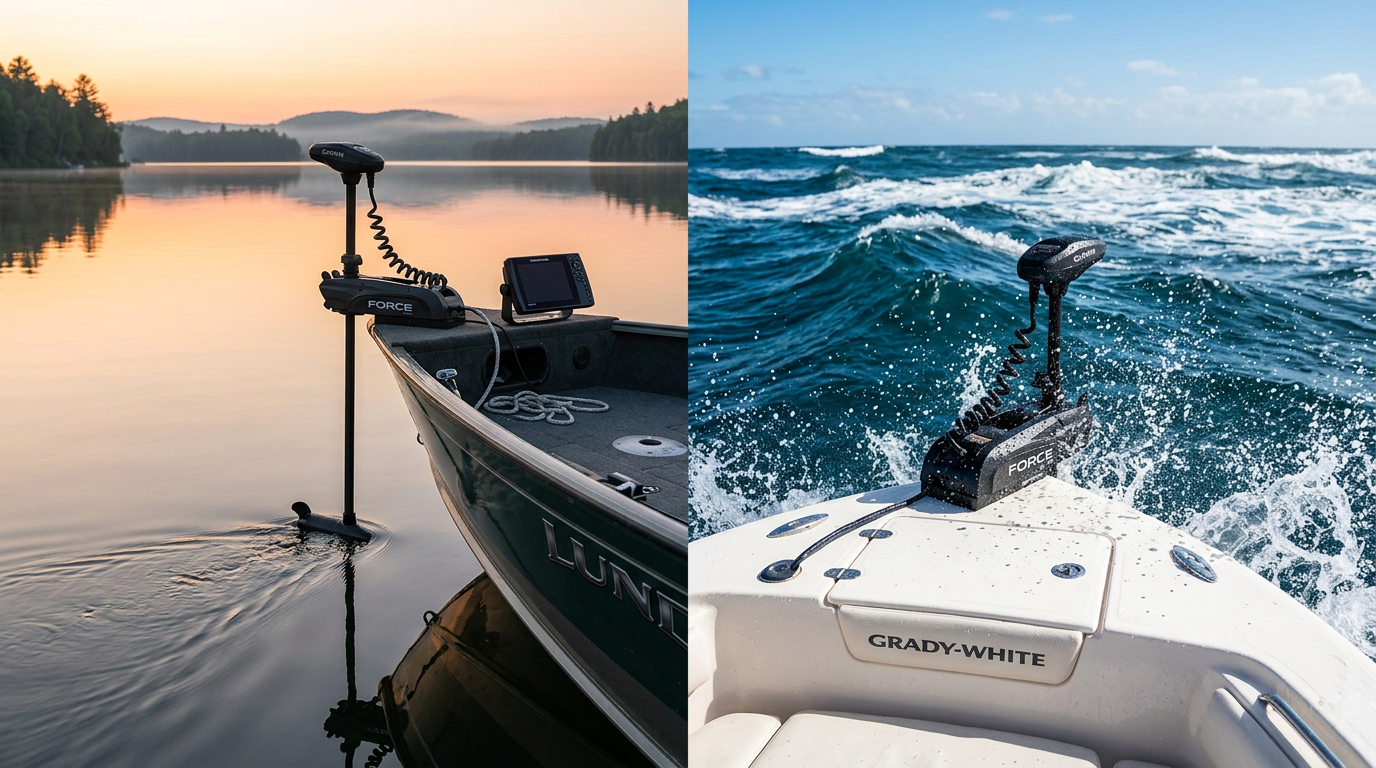
Freshwater vs Saltwater Trolling Motors: What Should You Choose?
The freshwater vs saltwater trolling motor decision isn't just about price — it's about how well your motor holds up to your actual operating environment over time. Choosing the wrong type can lead to premature corrosion and costly repairs.
What Makes Saltwater Trolling Motors Different
Saltwater trolling motors are built with corrosion-resistant materials, sealed electrical connections, and coatings designed to withstand constant salt exposure. These features add cost but are essential for motors regularly used in coastal or brackish water.
Why Freshwater Trolling Motors Are Built Differently
Freshwater trolling motors are optimized for lakes, rivers, and reservoirs where corrosion risk is significantly lower. They're often more affordable, but using one consistently in saltwater will accelerate wear on components not designed for that exposure.
What If You Fish in Both Environments?
Anglers who split time between freshwater and saltwater should lean toward a saltwater-rated motor, since it can handle both environments safely, while a freshwater-only motor is not built to handle saltwater's corrosive effects.
Other Specifications to Check Beyond Water Type
Once you've settled on freshwater or saltwater construction, revisit thrust, voltage, shaft length, and mounting style to ensure the complete package matches your boat — water type is just one piece of the overall fitment picture.
Key Takeaway: If you ever fish in saltwater, choose a saltwater-rated motor — it protects your investment even if you also fish freshwater.
Freshwater vs Saltwater Comparison
| Feature | Freshwater Motors | Saltwater Motors |
| Corrosion resistance | Standard protection | Enhanced coatings and sealing |
| Best for | Lakes, rivers, reservoirs | Coastal, brackish, offshore use |
| Typical cost | Generally lower | Generally higher |
Frequently Asked Questions
Will a freshwater motor work occasionally in saltwater?
Occasional use with thorough rinsing may be tolerated by some models, but regular saltwater use requires a saltwater-rated motor.
Are saltwater trolling motors worth it for freshwater-only anglers?
Not necessarily — freshwater motors are typically more cost-effective if you never operate in saltwater.
Not sure which type fits how you fish? Contact our team for a recommendation.